Portland, OR. Advantis Credit Union is teaming up with Self Enhancement, Inc. (SEI) to help students with online learning. The $20,000 grant to SEI represents the first of many funded projects that are part of its new Advantis Allies for Good community giving program, an ongoing commitment to allocating one-third of its annual community giving budget to programs supporting underrepresented and marginalized communities. Partnering with SEI to support those who need it most – in this case, disenfranchised students seeking an education and their families – is a part of Advantis’ renewed community giving commitment. Jason Werts, Advantis President and CEO, explains how the credit union is making an effort to lift up, “people of color, LGBTQ+ and other underrepresented communities.”
Like millions of students across the country, many Oregon students are still struggling with distance learning due to problematic and spotty Internet connections at home.
While districts evaluate in-person classroom time, distance learning will continue for most students. Advantis’ $20,000 SEI grant will directly help local economically disadvantaged students who are impacted the most by online access and connectivity issues. It will provide greater bandwidth to increase internet accessibility for 66 households throughout the metro area, making it easier for students to attend and participate in online classes and other learning activities.
“The kindness and generosity of Advantis Credit Union will play a powerful role in connecting disenfranchised students and their families to education,” said Tony Hopson, SEI President, and CEO. “By providing access to the resources of the internet, as well as receiving technical and educational support, families will have new opportunities to grow their skills and successfully increase their access to information.”
“As a co-op, we are committed to our founding principle of ‘people helping people’ and we’re reshaping our community giving to drive positive change,” said Werts. “Our SEI grant to help students and families access critical education programs online is simply the beginning for us as we support addressing the inequality gap among Black, Brown, Indigenous.”
Advantis Aims to Drive Positive Change by Introducing New Giving Program to supporting communities that have faced historical and ongoing exclusion and underrepresentation. Through the financial support of nonprofits dedicated to helping these communities, education and resource initiatives, new products and services, and volunteer service, the program aims to create greater opportunity and representation within marginalized communities. Advantis’ grant to SEI is the first investment that the credit union has made through its Allies for Good program.
About Self Enhancement, Inc. (SEI)
Self Enhancement, Inc. (SEI) is dedicated to guiding underserved youth to realize their full potential. Working with schools, families, and partner community organizations, SEI provides support, guidance, and opportunities to achieve personal and academic success. SEI brings hope to individual young people and enhances the quality of community life. For more information, visit selfenhancement.org.
About Advantis Credit Union
With $1.8 billion in assets, Advantis Credit Union is Oregon’s sixth-largest not-for-profit financial cooperative. Advantis returns earnings to its members in the form of better rates, low fees, and more free services. Advantis is locally owned by over 79,000 members and has nine branches in the Portland metro area. For more information, visit advantiscu.org.
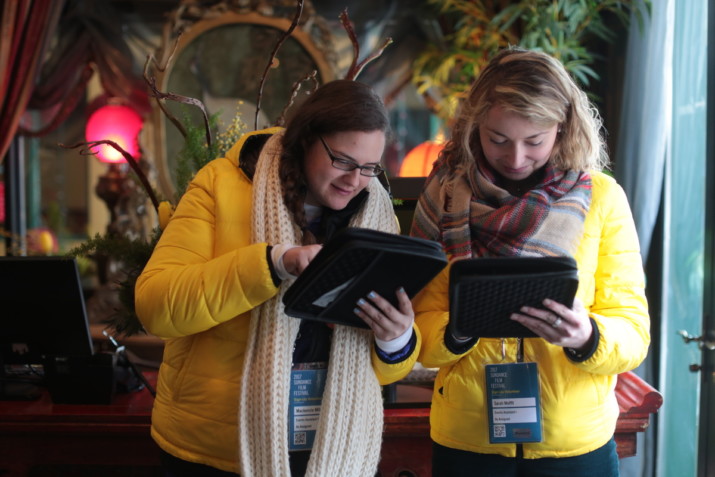
Park City, Utah. The Sundance Film Festival looks different this year–it’s virtual. There are 71 Features, 50 shorts, 4 indie series, 14 New Frontier Projects debuting on digital platforms and satellite screens nationwide from January 28-February 3, 2021. One highly anticipated film that has excellent reviews is Coda (pictured above). It was directed by Sian Heder and stars Emilia Jones, Eugenio Derbez, Troy Kotsur and Marlee Matlin. This drama is about a girl who is the only hearing person in her deaf family.
There’s a virtual “Main Street” where you can watch major panel discussions and gatherings at the festival for free. Click here to find out more.
In addition to the online platform, there are in-person experiences in Park City and across the country.
Here’s a video about the first day:
Additionally, festival attendees can gather in virtual waiting rooms, participate in live Q&As, and congregate in new, online environments.
The films were selected from 14,092 submissions including 3,500 feature-length films. Of the feature film submissions, 1,377 were from the U.S. and 2,132 were international.
Above, is a scene from “President” by Camilla Nielsson. (photo credit, Sundance)
“Of course, the pandemic year demanded adaptation,” said Keri Putnam, Sundance Institute’s Executive Director. “On a deeper level, we also recognize the urgency of supporting independent storytellers at a time of great upheaval in the film and media fields. We’re proud this edition of the Festival is fiercely independent and will reach people everywhere, celebrating both the theatrical experience at our Satellite Screens and streaming on our platform.”
“This Festival is a singular response to a singular year – both in design and curation – and we are excited about the new dimensions of possibility it will reveal. But at its core is something that speaks to our most enduring values,” said Tabitha Jackson, Director of the Sundance Film Festival. “For thousands of years humans have gathered to tell stories and make meaning. In this pandemic year, we gather to celebrate a constellation of artists with unique perspectives that express this current moment and who together are saying, ‘We exist. This is who we are. And this is what we see.’”
“The work in this year’s program is groundbreaking, imaginative, and formally daring,” said Kim Yutani, the Festival’s Director of Programming. “With over half the program made by first-time directors, a sense of discovery remains true to us at Sundance. This year’s Festival presents irrefutable evidence that despite the challenges, the independent voice is as strong as ever.”
The full 2021 slate of works, including 71 feature-length films, representing 29 countries and 38 first-time feature filmmakers. 14 films and projects announced today were supported by Sundance Institute in development, through direct granting or residency Labs. 66 of the Festival’s feature films, or 93% of the lineup announced today, will be world premieres.
From The Sundance Institute:
The Sundance Institute is a global nonprofit arts organization established by Robert Redford. Since its founding in 1981, the Institute has provided a nurturing oasis for independent artists to confidently develop their inimitable voices, and speak their truth without compromise—free from commercial pressure. We stand in solidarity with risk-taking creators and the audiences who support them.
We mentor and support a vibrant international community of independent artists across 184 countries, championing the discovery and development of storytellers whose important stories might otherwise go unnoticed.
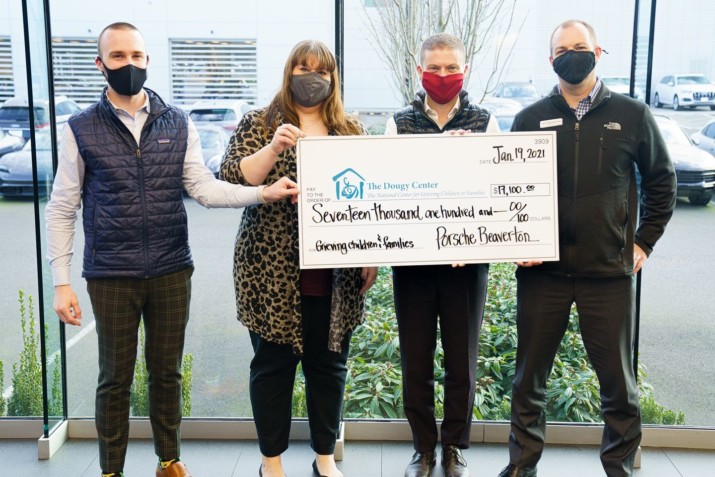
Portland, OR. As the toll of the worldwide pandemic climbs higher every day, so does the need for grief response and counseling for families. Porsche Beaverton and Audi Beaverton are helping the Dougy Center’s grief counseling efforts by donating $17,100. The money was raised because Porsche and Audi pledged to donate $100 for every car sold during the month of December.
Everyone responds to grief in a unique way and grief can last a lifetime, which is completely normal. Counselors explain that being grief-informed is vital now. “After listening to and supporting thousands of children, teens, young adults, and adults who are grieving the death of someone in their lives, and with pandemic-related deaths increasing, and more than 1.6 million deaths worldwide, over 300,000 in the U.S., it is time, now more than ever, to understand what it means to be grief-informed.” Here’s a link to resources addressing grief:
The Dougy Center (founded in 1982) has been helping children, young adults, and families through their grief and trauma by teaching them that grief is not only natural but that there is no “right way” to grieve. the loss of a loved one. The Dougy Center is also offering many programs remotely for easy access from home.
Dougy Turno, a 13 year old boy who inspired the founding of the Dougy Center for grieving children and familes.
Despite the social stigmas surrounding the display of grief and sadness, the Dougy Center seeks to raise awareness to break down the barriers of mental health. In a paper written by Dr. Donna Schuurman and Dr. Monique Mitchell (two directors at the Dougy Center), they explain that grief manifests itself in various ways through many social facets of our lives, leading to a complicated social web of emotional response and management with no easy answer. Further, they say that dealing with one’s grief has no time-line or direction and that it can last a lifetime. They say, during this time of pain and loss across the nation and the globe, it’s important to remember that you are not alone and that there are resources for you.
Yet, the Dougy Center doesn’t place sole responsibility of mental health awareness and management on health care professionals. Rather, their mission is one of mutual aid (read: reciprocal aid and cooperation) and community involvement. This is an important distinction as health care access is expensive and often inaccessible, especially when considering mental health. The Dougy Center has continually been a positive force within the community by offering training for individuals and/or organizations seeking to become grieving counselors, providing safe spaces for grieving children and their families, and raising awareness about mental health.
From the Dougy Center:
If you’d like to donate your resources or time, the Dougy Center has a plethora of options available to you. They also thrive on donations, which can be offered here.
The Dougy Center, the first center in the United States to provide peer support groups for grieving children, was founded in 1982. A courageous boy named Dougy Turno died of an inoperable brain tumor at the age of 13. In the two months prior to his death, he was a patient at Oregon Health Sciences University, where Beverly Chappell, at the request of Swiss psychiatrist and pioneer in the field of death, dying and bereavement, Elisabeth Kubler-Ross, supported Dougy and his family during his treatment. Bev quickly observed Dougy’s ability to bond with other teens facing serious medical issues, how he intuitively knew he was dying, and how he helped other kids talk about their fears. After his death, Bev envisioned a place where children, teens, and their parents coping with the death of a family member, could share their experience with others who understood, who didn’t tell them to “get over it” or judge how they chose to grieve. The first grief support groups met in Bev’s home and has grown from that grassroots effort to become a sought after resource for children and families who are grieving. It is still the only year-round child-centered program offering peer support groups to grieving families in our community.
Portland, OR. The Autism Society of Oregon is helping families face pandemic challenges like upheaval in schedules, isolation, and lack of structure. The nonprofit is offering information on Covid-19 resources online:
For a wealth of resources on COVID-19 including 9 tool kits on a variety of topics and a dozen social stories, see the Autism Society of America website at LINK. There is a new social story specifically on getting the COVID-19 vaccine that can be downloaded and Recursos Del Gobierno en Español.
For resources in Oregon and SW Washington, including a list of support and social groups meeting virtually, Calendar of Events, Resource Directory, and videos about autism, see the Autism Society of Oregon website at LINK.
Support is important, according to University of Michigan researchers. For children with an autism spectrum disorder, who thrive on routines and predictability, the everyday disruptions and uncertainty from the pandemic may be especially stressful. “Families who have a child with autism are facing extraordinary challenges,” says Sarah Mohiuddin, M.D., a child and adolescent psychiatrist at Michigan Medicine C.S. Mott Children’s Hospital. “People with autism feel more comfortable with routines, which can make any change a stressful event.”Here are some strategies:
1. Talk about COVID – but turn off the news
Even if a child hasn’t asked about it or is unable to, they likely have questions about coronavirus and have probably heard conversations around them. Mohiuddin recommends using social stories to explain COVID-19. This can be done using your own drawings or through videos and graphics available online through resources like Autism Speaks.
Parents should provide opportunities for asking questions and use visual supports to help explain the situation and to reinforce key messages like proper handwashing techniques, at the child’s developmental level.
2. Re-create structure – and use visuals
Children with ASD seek familiarity so she recommends creating a daily schedule that loosely mirrors their regular school day with built-in breaks for snacks, lunch, and physical activity. But instead of making a new schedule on your own, work with children to create it. For example, ask them “do you want to have outside time before or after lunch?” or “do you want to play with Legos or playdough for creative time?”
Autism is the fastest-growing developmental disability in Oregon – and the world. If you haven’t already, you will meet someone with autism.
3. Seek social outlets
Children with ASD may have difficulties with social communication and interaction. But that doesn’t mean they’re not troubled by the loss of social outlets like school and activities. Face-to-face interactions also provide them with opportunities to practice and develop social skills. “A lot of children with autism enjoy and seek out social interactions,” Mohiuddin says. Mohiuddin encourages parents to look for ways to virtually connect children and teens with relatives, classmates, and friends through virtual platforms.
4. Make screen time intentional
Experts recognize that typical screen time rules may have relaxed a bit at a time when many kids rely on devices for remote learning. But for some children, especially those who may have both autism and ADHD or sensory issues, too much screen time can also exacerbate issues like hyperactivity, trouble with sleep, and irritability.“For kids with autism, electronics can be a positive tool to connect and engage with others,” Mohiuddin says. “But there’s also the risk that too much screen time may lead to an increase in challenging behaviors. The key is to be intentional about how and when children are using devices.”
Parents, who may be working from home and are also on screens, should try to carve out times in the day, even if short, to have one-on-one, screen-free time with children.
This could be 15 minutes spent playing a game, talking over a meal or interacting using toys that promote development.
5. Optimize treatment opportunities
Many typical interventions or medical appointments may not be available in the same format because of stay-at-home orders. However, a number of providers, including medical professionals, speech pathologists, and behavior therapists have transitioned to providing e-services or video visits. Speak with your providers to see what you may be eligible for.“Explore any opportunities that will help maintain the skills that your child has gained through interventions and treatments,” Mohiuddin says. “Don’t lose contact with your providers. It’s important to stay connected whether or not things are going well.”
6. Don’t forget self-care
“Trying to juggle the needs of a child with autism as well as all of the other demands of managing a household, work, and other family members in the home can be challenging for caregivers,” Mohiuddin says. She recommends planning time to engage in activities that will help replenish your energy and motivation such as talking to friends, engaging in a favorite activity, or getting exercise. Also, remember to maintain sleep hygiene and proper nutrition. Caregivers should also do what they can to stay connected with their own support networks, whether that’s providers or autism parent and caregiver networks.
From The Autism Society of Oregon:
ASO’s Autism Walk in Portland will be at Oaks Park once again and we hope to hold it in the late summer or early fall of 2021. Exact date to be determined.
ASO’s “Color the Blues for Autism” is tentatively scheduled for Sat, Sept 11, 2021 at LaGrande’s Riverside Park – with a Superheroes theme!
ASO’s “Color the Coast for Autism” is scheduled for Sat, Sept 25 at the KOA Resort at Astoria/Warrenton/Seaside.
The Autism Society of Oregon is Oregon’s leading organization providing resources, education, advocacy on policy matters, and support for individuals and families living with autism.
We are committed to these core principles:
• We provide services without regard to a person’s age, race, religion, disability, gender, sexual orientation, income level, or level of need on the autism spectrum • We strongly encourage and welcome families, professionals, and individuals living with autism with opportunities to participate in our governance, on our committees, and as staff members • We partner with others to advance the well-being of all living with autism • We promote individual choice and self-determination of individuals living with autism, aided by parental and guardian advocacy • We recognize a person living with autism can and should be able to maximize his/her quality of life and oppose any denial of their opportunities • We oppose any discrimination and harm directed towards individuals living with autism and their families
Portland, OR. Each day, more than 8,000 children are in Oregon’s foster care system. They need stable, supportive, and loving foster parents. Boys & Girls Aid is offering online foster care information sessions this winter. There’s a lot to learn according to educators, “Our info sessions are low-key opportunities for you to gather information about foster parenting, and to meet our amazing Outreach Coordinator.
Here’s a video about the experience of being a foster parent:
According to Boys & Girls Aid, “The need for foster parents is still urgent. To join our meeting from the comfort of your own home, please register below to an online info session, our Outreach Coordinator will contact you and provide you with a link to join our free online info session.”
In 1885, Boys & Girls Aid was founded in response to a crisis. Children were being abandoned on the streets of Portland with nowhere to go. The agency created a home for these children to go to and connect in the community to find families for them.
You may register online here: https://www.boysandgirlsaid.org/fostercare.
Learn about fostering with Boys & Girls Aid
Thursday, January 28th 12:00pm – 1:00pm
Online info session
Learn about fostering with Boys & Girls Aid
Wednesday, February 3rd 5:00pm – 6:00pm
Online info session
Learn about fostering with Boys & Girls Aid
Thursday, February 18th 12:00pm – 1:00pm
Online info session
From Boys & Girls Aid:
This is Boys & Girls Aid’s solution. Children in foster care need families who know their history and are invested in their future. The cycle of foster care is a brutal one that ends with children struggling as adults. To avoid this, we need to ensure their future safety and resolve their past traumas by connecting them with a forever family.
Our journey to end the cycle of foster care is not one we want to go at alone. Join us in building a better future for children in Oregon.
Over 135 years later and Oregon is facing a new crisis.
More than 8,000 children are living in Oregon’s foster care system. This morning, these children woke up in a bed that is not theirs, they are living without their parents, their siblings, their family pet, their teachers, and friends. They are living in limbo, unsure about their future.
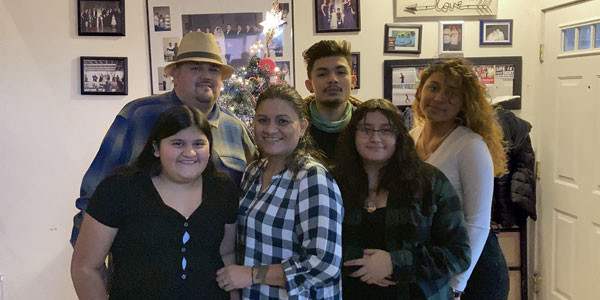
Portland, OR. Portland/Metro East and Willamette West Habitat affiliates have joined forces and become Habitat for Humanity Portland Region. Leaders say now they can serve more people like Sandra (pictured above in the center with her family). “As I built my house for my own children, the feeling is hard to describe,” Sandra explained. “It’s kind of like standing on top of the roof saying, ‘Oh my God, this is mine, I did this.”
With the expansion, the nonprofit’s leaders say they will be able to tackle the shortage of affordable homeownership with even more efficiency.
“As each organization has grown, it has become increasingly clear that we can have a greater impact in our region as a single organization that fully integrates our programs and staff,” states CEO Steve Messinetti.
The new Habitat for Humanity Portland Region has four active build sites. Habitat for Humanity provides homeownership opportunities to families earning as little as $30,000 a year.
The organization is offering an overview of each of the new projects:
Simpson
At Simpson, we are building a 10-home community in the heart of the Cully neighborhood. Located on the 6300 block of Killingsworth Street, this community will be home to a diverse set of homebuyers. Of the 10 homes, there will be two-, three-, and four-bedroom options along with one parking space per unit and will feature electric-powered appliances, fenced backyards, and Earth Advantage certification. Currently, three of the four duplexes and triplexes have been framed. The first unit’s mechanical, electrical, and plumbing installation has been completed with the next units’ rough-installs occurring in January and February.
Kenton
In Kenton, Habitat is building a 30-home community consisting of two structures reaching three stories high. These 30 sustainable homes are located at the intersection of N. Interstate Avenue and N. Kilpatrick Street in the Kenton neighborhood. Many of the homes will be sold to homebuyers who have generational ties to the area, as part of the City’s North/Northeast Preference Policy—a tool that helps address the harmful impacts of marginalization and displacement.
So far, 12 homes are in the finishing stage, which will continue into January. Home interior finishes are being installed, including: lighting, appliances, flooring, and painting. Final exterior finishes, such as a ramp for accessibility, corridor deck waterproof coating, mailboxes, bicycle racks, and address numbers are also being installed. Once our crews do a final deep cleaning of each unit, we’ll welcome homeowners in early 2021! Then, we’ll move onto building 18 more homes. Right now, we’re working with sub-contractors to help lay the foundation. We will begin framing in early 2021.
Cherry Blossom
Located in the Mill Park neighborhood in SE Portland, Habitat’s newest community will consist of 31 homes. This community will feature a green space, playground, one garage for each unit, and the homes will vary in size from two- to five-bedrooms. Right now, we’re installing the retaining walls to secure the homes on the property’s slope. The stormwater, sewer, and water service pipes installation is complete. Soon, we will lay foundations and framing for each home.
Denney Gardens
Denney Gardens is located in SW Beaverton and will be a 16-home community. Currently, the project is about half-way completed. Eight homebuyers and their families have already purchased and are now living in their homes. The remaining eight units consist of two triplexes and a duplex. Right now, one building is nearly through electrical and plumbing installation and will have insulation and drywall installed at the end of January. On the other two homes, we are excavating the final portion of land and pouring concrete foundations, which include: home slabs, garages, and sidewalks. This process is scheduled to be completed by the end of January, soon followed by framing.
Olin
We are excited to announce that Olin Townhomes in the Portsmouth Neighborhood is nearly complete! We are so grateful for all of the support we have received to get these N/NE Preference Policy homes built. Congratulations to Habitat’s newest homeowners!
We are so grateful for the many donors, volunteers, and homebuyers who made these homes a reality! Though it isn’t possible right now, we cannot wait to welcome back Habitat’s many construction-site volunteers.
This year, 2021, is the 40th anniversary of Habitat for Humanity working in the Portland region. Habitat Portland/Metro East and Willamette West Habitat have long, successful track records. Since its founding in 1981, Habitat Portland/Metro East has partnered with more than 1,700 people, and Willamette West Habitat nearly 700 people, to purchase affordable homes and receive critical home repairs.
Portland, OR. Many Oregonians have a longstanding tradition of plunging into frigid waters every February to raise money and awareness for Special Olympics Oregon. Members of the law enforcement community, seen above, often headed into the water as a group. But because of the Covid-19 pandemic, the nonprofit won’t be gathering to Plunge together in 2021. Instead, people can sign up for the new Virtual Plunge.
Here’s a video about this year’s plunge:
Here are the options for the 2021 Plunge:
Option 1 – Hit the Great Outdoors:
✓ Plunge down the slopes (sled, ski, snowboard)
✓ Snowball fight/hug a snowman
✓ Snow angels in a swimsuit
✓ Run, walk or roll in the Polar 5K/10K
Option 2 – Chill at Home:
✓ Bucket of cold water
✓ Garden hose/sprinkler
✓ Slip n’ Slide
✓ Water balloons/Super Soakers
✓ Cold shower, tub, or a kiddie pool
✓ Cold drink
Here’s a video about the fundraising effort:
State leaders say through the power of sports, people with intellectual disabilities discover new strengths and abilities, skills and success.
From Special Olympics Oregon:
Special Olympics Oregon believes in the transformative power and pure joy of athletic competition. Every day across the state, we help children and adults with intellectual disabilities become athletes and grow a strong, supportive community of advocates. Through year-round training and serious competition, Special Olympics participants journey along a proven pathway to better health, essential life skills and lifelong friendships.
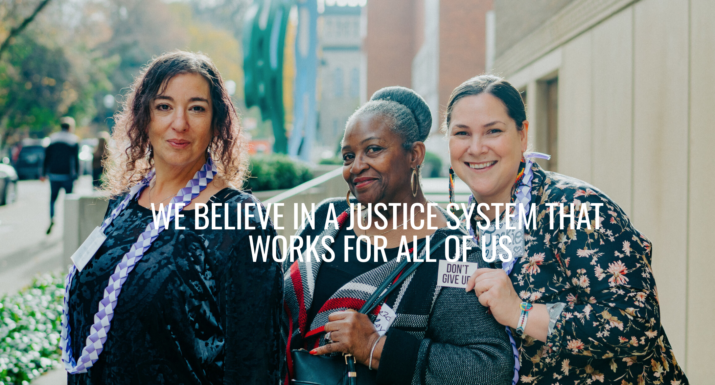
Portland, OR. The Oregon Justice Resource Center is one of 13 nonprofits selected to receive grant money from The National Football League (NFL). The Player-Owner Social Justice Working Group is handing out a total of nearly $4.3 million in #InspireChange grants. Seattle Seahawk’s Russell Wilson (seen above) supports the Inspire Change program. In Oregon, this year’s funds will support the Women’s Justice Project – the Oregon nonprofit that addresses the needs of women in the criminal justice system to provide direct legal services, public awareness campaigns, and advocacy.
The goal of the Oregon Justice Resource Center is to promote civil rights and improve legal representation for communities that have often been underserved in the past: people living in poverty and people of color among them.
Program managers say they work to ensure the criminal legal system treats women fairly, protects their health and safety, and makes it possible for them to successfully rejoin their communities when they are released.
“As a league, we are proud to provide financial support for such impactful programs that inspire change, but we know our work as a league and at the team level in the cities where we play is not done and we must continue to support the march against social injustice,” said Atlanta Falcons Owner and Chairman and member of the Player-Owner Social Justice Working Group, Arthur Blank. “This past year opened the eyes of so many to the inequality suffered by many of our fellow brothers and sisters, neighbors and associates. We will continue to stand with our players as we address underlying issues and bring people together to achieve meaningful, positive change.”
The Working Group also made a commitment to address the “digital divide,” a longstanding barrier to internet and technology access in the U.S., particularly in communities of color.
This year these disparities have been exacerbated due to the COVID-19 pandemic where students and families were forced to learn and work from home. As such, the Working Group voted to dedicate an additional $1 million earmarked specifically for NFL clubs to work with local nonprofits to help alleviate the “digital divide” in areas that need the most support.
“Education is a basic human right, and we can no longer deprive students of the tools they need to succeed, including devices and the Internet,” said Kelvin Beachum, Players Coalition task force member, Player-Owner Social Justice Working Group member, and Arizona Cardinals offensive lineman. “I am proud of the work Players Coalition and the NFL has done to help close this ‘digital divide’ and help those children in underserved communities. There is a lot more work to do, and I hope together with support from the new federal government we will be able to continue what we’ve started and make sure no child’s education suffers because of lack of resources.”
In addition, the NFL Foundation has now provided more than 1,200 matching grants to current players and Legends for nonprofits of their choice to help reduce barriers to opportunity. These grants have supported more than 500 nonprofit organizations in areas ranging from education to racial equality.
Here’s a list of all of this year’s recipients:
Association for Enterprise Opportunity will utilize its funding to support the “RESILI” program designed to provide strategy and developmental assistance to local Black-owned businesses and target the wealth gap that exists between Black and white American families.
Boys & Girls Clubs of America will use the funding to support its Youth for Change Town Hall and the creation of the TLC Youth Advocacy process, an effort to further educate 5,000 teens and build advocacy capacity via service-learning projects. The organization will also train 32 staff members on leading Wellness Mentoring Circles to address topics related to culture, history, and customs in the context of community.
Breakthrough Miami will focus its grant to advance the Changemaker Leadership Track supporting current Breakthrough Scholars and recent alumni to build capacities to challenge the digital divide, gain early work experience, college advising, financial literacy, and leadership development.
Center for Policing Equity: plans to expand COMPSTAT usage– software that tracks incidents, identifies trends, and holds departments accountable by measuring crime. The organization combines data collected from COMPSTAT with census information (geographic markers, racial disparities, etc.) to more accurately measure justice.
Covenant House will strengthen its workforce development and education services across the U.S., providing support specifically designed to meet the needs of youth and young families facing homelessness.
Just City-Memphis will use the funding to support the Memphis Community Bail Fund, the Clean Slate Fund, and Court Watch programs. Memphis Bail Fund has freed more than 500 people from pretrial detention, while the Clean Slate Fund helps people navigate the complicated process of expungement. Court Watch trains and places volunteers in courts to observe – targeting the disproportionate impact the system has on people of color.
Ladies of Hope Ministries will use the grant to support its Faces of Women Imprisoned Speakers Bureau, Parole and Probation Accountability Project, and EPIC Ambassadors policy advocacy project. Through its #RewritingHerStory series, the LOHM changes the narrative about women and girls who are directly affected by the criminal justice system and transforms policies and practices that limit opportunities and exacerbate a cycle of poverty, trauma, harm, and incarceration. National ambassadors work directly with policymakers to address probation restrictions, and police and community relations.
MENTOR will increase its resources and tools on virtual mentoring made available to mentoring programs nationwide. The organization will continue to recruit and train people, schools, and employers to bolster youth mentoring, advocate, organize, and advise the government to create policies that integrate mentoring, and provide research and training on mentoring best practices through their local affiliates and the overall intersection of social, racial, and economic equity and supportive relationships.
Oregon Justice Resource Center will use its funding to support the Women’s Justice Project – the first and only program in Oregon that addresses the needs of women in the criminal justice system. The program provides direct legal services, public awareness campaigns, and advocacy coordination.
Per Scholas will enroll 220 new individuals into their Software Engineering courses – a 15-week, full-time training program that will include technical instruction and professional development in efforts to advance economic equity.
Texas Appleseed will use its funding to support the organization’s work in three areas that that disproportionately affect Black and Latinx Texans from low-income backgrounds: driver’s license suspensions, criminal record expungement, and debt collection.
United Way Worldwide will put the funding toward the Young Men United initiative, a national platform which aims to support 25,000 young men of color in the United States to and through post-secondary and into entry level career positions. United Way Worldwide and local United Ways will provide mentorships, internships, college and career readiness supports, and need-based funding to support each student, over the course of six years, beginning in junior year of high school and continuing through college graduation.
US Dream Academy will use its funding to aid in the continuation of the Children of Incarcerated Parents initiative, providing mentorship, leadership training, educational support and career readiness for a unique population of primarily Black and Latinx young people in communities harmed by racial bias and mass incarceration.
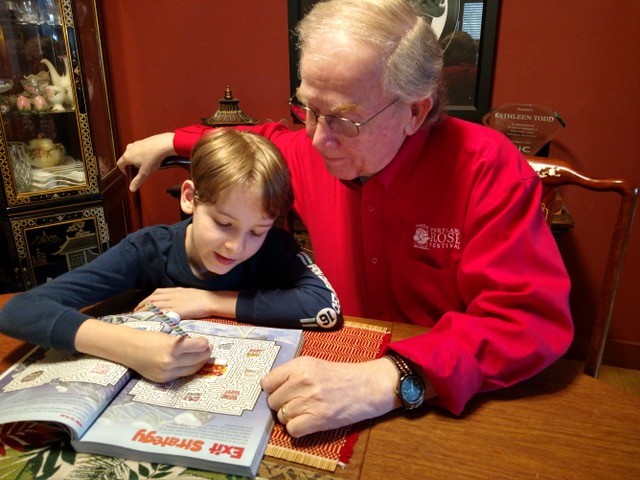
Portland, OR. Portland Rose Festival Foundation has elected Dave Todd (pictured with his grandson, Henry) as the new president for a two-year term. Todd is a retired Navy Captain (Reserve) and recently retired from a 33-year career as a university-level teacher. Todd plans on leading a group of board members into the new year of 2021 with the theme “Hope Reigns” for the Portland Rose Festival.
Todd shared his thoughts on the transition into the new year, “All of us feel a sense of loss as we look back on the year that spun out of control and changed our Festival so dramatically. Even so, those of us who work and volunteer for the Festival remain grateful that we are privileged to be a part of the world’s best Festival. The pay-forward for that privilege is we must do everything we can to make sure that the Festival does what it needs to do whenever people are able to return to it. We want the Festival always to be an escape, a celebration, and not a reminder of what was lost.”
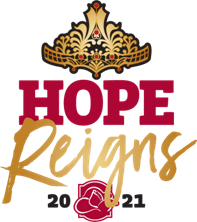
“Hope Reigns” 2021 Portland Rose Festival Theme
Todd also served as a Rose Festival Director for 31 years where he worked on a wide variety of committees, held all but one of the Foundation’s elective offices, and chaired multiple committees including seven terms as Chair of the Fleet Committee.
Secretary Dr. Thompson Faller – University of Portland (Retired)
Treasurer Bill Poppino – Corporate Airline Pilot
Assistant Treasurer Dayna Kirk – The Standard
The Festival board has also elected three new directors for 2021 including Steve Welch, a Senior Mortgage Banker with Guild Mortgage Company and member of the Rose Festival Clowns. Tragically on Jan. 3, 2021, Welch passed away due to a non- COVID illness.
Welch was well respected by the Rose Festival staff and volunteers not only for his wonderful antics as a member of the Festival’s clown family but as an incredibly warm and compassionate person.
The elected 2021 Directors include:
Tamara (Tam) Allison – Associate Financial Analyst at Portland General Electric
Steven Welch – Senior Mortgage Banker with Guild Mortgage Company (deceased)
Mary Abbott Young – Realtor with Coldwell Banker
Looking forward, Todd speaks on health and continuing the tradition of the Portland Rose Festival, “The health of our community and our friends around the world remains the most important thing. The Portland Rose Festival is here to stay. We continue to plan for a Rose Festival celebration when conditions allow.”
From Portland Rose Festival website: The Portland Rose Festival Foundation is a 501(c)(3) non-profit that serves families and individuals with programs and events that promote the arts, education, and volunteerism. We value environmental responsibility, diversity, patriotism, and our historic & floral heritage.
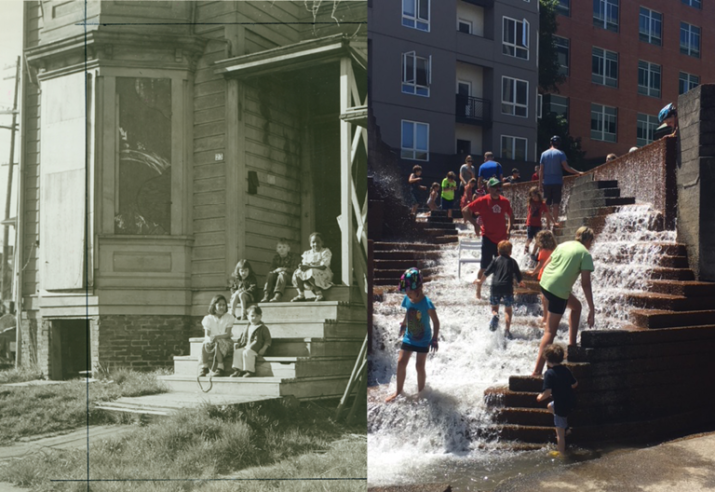
Portland, OR. With ongoing COVID-related restrictions still in place, you may be looking for some fun and fulfilling ways to pass the time. Portland’s Architectural Heritage Center (established back in 1987) has a “Virtual Museum” online series exploring the history of South Portland. Images like the one above are part of the collection. For those who’ve grown up in and around Portland, or even those new to the city, the black-and-white historical photographs and accompanying information offer an intriguing gaze back into a not-so-distant past.
The Architectural Heritage Center located at 701 SE Grand.
Part of this new online platform includes a partnership with Brian Libby’s XRAY.FM podcast. With an episode focusing on the specific Portland block of 10th Avenue and Alder Street and its 125-year history, the podcast explores the ever-changing culture here in Portland through historical records, photographs, and more. It’s free to listen to and has a whole lot of content available, including episodes on the Portland Art Museum, the Lincoln Hall, and the Portland Building.
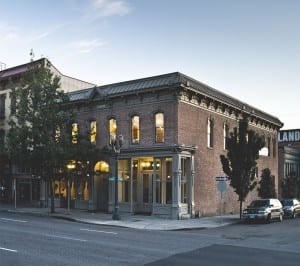
Pictured is a c.1910 postcard of the Hazelwood Creamery, located in the Selling-Hirsch building, one of the places discussed in the podcast.
AHC’s biggest event is its annual Gala. This event, typically attracting over 250 members, aims to connect the community while showcasing the AHC’s work within Portland. While COVID restrictions will not allow this event to take place in-person this year, the Gala will still continue on to a virtual format. This will take place on February 25, 2021, and will be free and open to all who desire to attend.
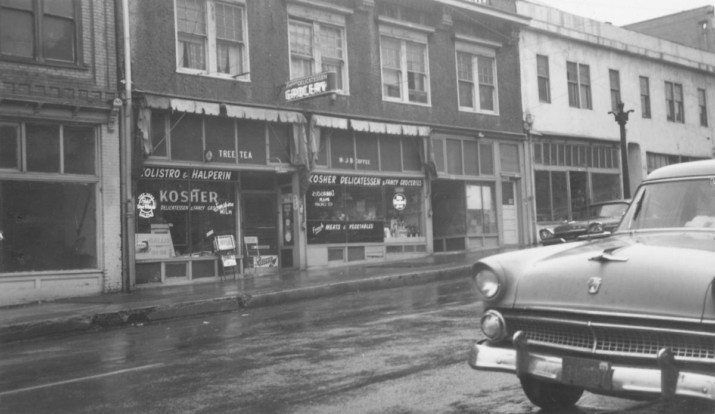
Grocery and Deli in South Portland, 1958. Photo courtesy Portland Archives and Records Center.
The Architectural Heritage Center has always been a nonprofit and thrives off of volunteer work. It is currently looking for volunteers who are passionate about the mission and goals. If you don’t have the skill requirements or availability for one of these positions, they are always happy for any donations received from patrons and this can be done in a number of ways.
About Portland’s Architectural Heritage Center from their website:
The Architectural Heritage Center is a significant historic preservation education facility for the Portland region and plays an important role in celebrating and advocating for the architectural heritage of our city and region. The Center includes two exhibition galleries, two classrooms, workshop space, a library, collections storage spaces, and the Foundation’s offices.
Public historic preservation programming, begun in 1992, continues at the AHC, as well as at historic sites and neighborhoods throughout the Portland metro area. We have served the needs of more than 65,000 people. Continued progress is being made on the professional inventory and documentation of the collections.
NONPROFIT BENEFIT TICKET GIVEAWAYS!
Sign up for our free weekly highlights for the chance to win two tickets terrific nonprofit events! If you "like" us on facebook, or sign up for our weekly news highlights, you'll be entered to win! Sign up today!
Look for another ticket giveaway soon! Are you a nonprofit looking to bolster your publicity with facebook and tweets? Email us and we'll run a contest with tickets to your event! [email protected]













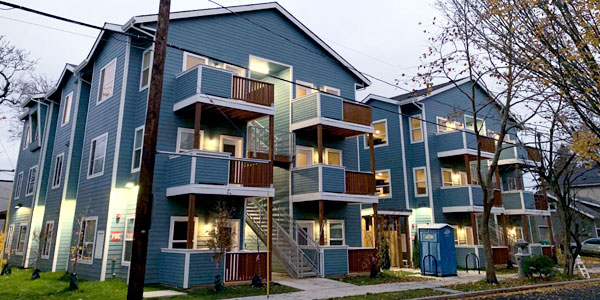
 At Simpson, we are building a 10-home community in the heart of the Cully neighborhood. Located on the 6300 block of Killingsworth Street, this community will be home to a diverse set of homebuyers. Of the 10 homes, there will be two-, three-, and four-bedroom options along with one parking space per unit and will feature electric-powered appliances, fenced backyards, and Earth Advantage certification. Currently, three of the four duplexes and triplexes have been framed. The first unit’s mechanical, electrical, and plumbing installation has been completed with the next units’ rough-installs occurring in January and February.
  In Kenton, Habitat is building a 30-home community consisting of two structures reaching three stories high. These 30 sustainable homes are located at the intersection of N. Interstate Avenue and N. Kilpatrick Street in the Kenton neighborhood. Many of the homes will be sold to homebuyers who have generational ties to the area, as part of the City’s North/Northeast Preference Policy—a tool that helps address the harmful impacts of marginalization and displacement.
 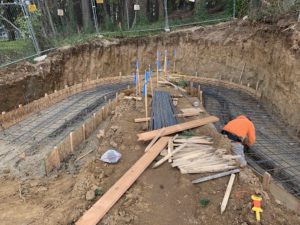 Located in the Mill Park neighborhood in SE Portland, Habitat’s newest community will consist of 31 homes. This community will feature a green space, playground, one garage for each unit, and the homes will vary in size from two- to five-bedrooms. Right now, we’re installing the retaining walls to secure the homes on the property’s slope. The stormwater, sewer, and water service pipes installation is complete. Soon, we will lay foundations and framing for each home.
  Denney Gardens is located in SW Beaverton and will be a 16-home community. Currently, the project is about half-way completed. Eight homebuyers and their families have already purchased and are now living in their homes. The remaining eight units consist of two triplexes and a duplex. Right now, one building is nearly through electrical and plumbing installation and will have insulation and drywall installed at the end of January. On the other two homes, we are excavating the final portion of land and pouring concrete foundations, which include: home slabs, garages, and sidewalks. This process is scheduled to be completed by the end of January, soon followed by framing.
 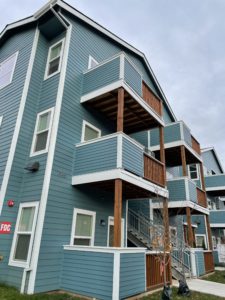 We are excited to announce that Olin Townhomes in the Portsmouth Neighborhood is nearly complete! We are so grateful for all of the support we have received to get these N/NE Preference Policy homes built. Congratulations to Habitat’s newest homeowners!